
You love your home. You’ve put so much into it – money, time, sweat equity, and probably more than a few weekends you’ll never get back. But homes don’t send warning signals before things go wrong – and in the U.P., things go wrong faster and harder than most places. A home maintenance inspection is how you stay ahead of it.
Your home is likely the biggest investment you own — and it’s almost certainly where your family spends most of their time. So whether “home” to you is a double-wide in rural Schoolcraft County, a historic Victorian-era home in Ishpeming, or a condo on the lakeshore in Marquette, it’s worth knowing what’s actually going on inside it.
If you’re like most homeowners, though, finding out the truth about your home can feel a little scary at first. So if you are feeling butterflies stirring up inside at the thought of a home maintenance inspection, don’t worry. It’s completely normal to feel a little uneasy about the idea of a home inspector poking around your place. What if they find something? What if it’s expensive? What if you’ve been living next to a problem you didn’t know about?
Here’s the thing: that uneasy feeling is exactly why a home maintenance inspection is worth scheduling.
Because homes don’t always send warning signals. An electrical issue doesn’t send a warning. Moisture doesn’t knock before it enters a crawl space. And a small roofing defect can quietly become a major water intrusion after just one Upper Peninsula winter.
In Michigan’s Upper Peninsula, this is especially true. Our winters are hard on houses. Freeze-thaw cycling, heavy snow loads, ice dams, and spring snowmelt put stress on roofs, foundations, and building envelopes in ways that most parts of the country never experience. Add in an older housing stock across communities like Marquette, Negaunee, Munising, and Maninstique, and you have a recipe for deferred issues that compound quietly over time.
A home maintenance inspection is how you find out what your home is actually telling you — before it has to get loud.
AT A GLANCE: A home maintenance inspection is a full, professional inspection of your home — the same thorough process used for home buyers and sellers — performed for the benefit of current homeowners. It follows InterNACHI Standards of Practice and covers all major systems and components from roof to foundation. In Michigan’s Upper Peninsula, common findings include moisture intrusion, ice dam damage, mold growth, pest activity, aging electrical systems, and deferred maintenance in older homes. This inspeciton is available to any homeowner, at any time, regardless of whether the home is for sale.
6 Reasons U.P. Homeowners Schedule a Home Maintenance Inspection
Maybe it’s the rising cost of housing and repairs and a desire to protect their investment, or perhaps homeowners in the U.P. are just getting braver, but we’ve noticed an uptick in home maintenance inspection bookings lately. Here are some of the benefits our clients receive from this service:
1. Safety — because your home should protect you, not endanger you.
We cover this in more depth below, but it deserves the top spot. Home inspections aren’t just about protecting your investment. They’re about protecting your family.
Electrical defects, fire hazards, trip and fall risks, carbon monoxide concerns, plumbing and HVAC issues — these are the things that can cause real harm, and they’re often invisible until something goes wrong. An inspection gives you the chance to find them first.
2. Catch small problems before they become big ones.
A minor issue left unaddressed through a U.P. winter has a way of becoming a major expense come spring. A small roof penetration becomes a water intrusion problem. A damp basement becomes a mold remediation project. A slow drip under a sink becomes a rotted subfloor.
Early detection is almost always cheaper than late discovery. That’s not a scare tactic — it’s just how building failures work.
3. Take the stress out of budgeting your maintenance dollars.
Not every finding requires immediate action. Part of what makes a good inspection report useful is that it helps you prioritize. You’ll know what needs attention now, what can wait a season, and what you can plan and budget for over the next year or two. That’s genuinely useful information — and it turns a vague sense of “I should probably deal with that someday” into a clear, manageable list. And surprise – when you’re clear about exactly what you need to do and when, it’s so much easier to tackle the jobs and actually get them done!
4. Stay ahead of what the U.P. dishes out.
Homes across Marquette, Alger, Delta, Schoolcraft, Dickinson, and Menominee counties face challenges that inspectors in warmer, drier climates don’t fully appreciate. Ice dams. Frost heave. Moisture-driven foundation movement. Heating systems running at capacity for five or six months straight. These aren’t worst-case scenarios up here — they’re Tuesday. And they have maintenance implications that build quietly over time if no one is paying attention.
5. Avoid emergency repairs.
Things rarely fail at a convenient time. A furnace that quits at Christmas, a roof that lets go just as you’re about to leave for a non-negotiable business trip, a sump pump that fails in April just when you need it most — these are the situations a maintenance inspection helps you get ahead of.
Fixing things on your schedule, at a price you’ve planned for, beats scrambling for a contractor in the middle of a winter storm every single time.
6. Be ready for the day you sell — even if that day feels far away.
Nearly everyone moves eventually. And when that time comes, one of the more stressful parts of selling a home is having a buyer’s inspector walk through your place and find major, costly issues you didn’t even know about. Issues that can eat into your pricing or even tank the sale.
Here’s what we’ve seen in our years of doing inspections across the U.P.: sellers who have kept up with maintenance — who know their home, who’ve addressed issues over time — move through the sales process with far less stress. Their homes are easier to price confidently, they’re less likely to face last-minute repair negotiations, and they tend to sell faster.
And there’s something else worth saying: if you’ve ever felt nervous about the idea of your home being scrutinized, the best antidote to that is already knowing what’s there. A home maintenance inspection today means fewer surprises later — for you and for any future buyer.
What Does a Home Maintenance Inspection Include?

A home maintenance inspection follows InterNACHI Standards of Practice, the very same standards used for buyer and seller inspections, following guidelines backed by the world’s largest and most respected home inspection trade association.
When we do a home maintenance inspection on an Upper Peninsula home, we inspect all readily accessible systems and components, including:
- Roof — shingles, flashing, gutters, fascia, soffits, and visible roof structure
- Exterior — siding, trim, grading, drainage, driveways, walkways, and decks
- Foundation and structure — visible foundation walls, framing, crawl spaces, and basements
- Electrical — service panel, wiring, outlets, switches, and visible components
- Plumbing — supply and drain lines, water heater, fixtures, and visible connections
- HVAC — furnace, boiler, heat pump, air conditioning, and ventilation systems
- Insulation and ventilation — attic and crawl space insulation, vapor barriers, and airflow
- Interior — ceilings, walls, floors, windows, doors, and stairs
Every finding is documented in a detailed digital report with photos. You’ll typically have it in your inbox within 72 hours — often the next day.
One thing worth knowing: Michigan has no state licensing requirement for home inspectors. That makes credentials matter. Rich Beasley, our lead inspector, holds the Certified Master Inspector® (CMI®) designation — the highest professional credential in the inspection industry, and the only one held by any inspector in the Upper Peninsula. Our team inspector, Ona Martin, is InterNACHI certified. Every inspection we do is backed by real construction knowledge and deep familiarity with how U.P. homes are built, and how they age.
Safety First: What We’re Looking For Beyond the Obvious
A home inspection is, at its core, a safety evaluation. Before we think about deferred maintenance or budgeting priorities, we’re looking for conditions that pose a risk to the people living in the home. Here are some of the most important ones.
- Electrical hazards. Faulty wiring, overloaded circuits, and aging electrical panels are among the most serious defects we find. According to the National Fire Protection Association (NFPA), electrical failures and malfunctions are a leading cause of home fires — and they cause more property damage per incident than almost any other fire source. In older homes across the U.P., we frequently encounter panels and wiring that were installed decades ago and are well past their service life. This is not theoretical risk.
- Fire safety. Smoke detectors and carbon monoxide alarms are easy to overlook until you need them – and according to the NFPA, nearly 60% of home fire deaths occur in homes where smoke alarms were missing or not working. We check for their presence and note any that appear missing or improperly placed. In addition to these and electrical issues, we also look for other fire safety concerns: improper storage near heat sources, compromised fire blocking in garages and other locations, and conditions around fireplaces, wood stoves, and chimneys that are common in U.P. homes.
- Fall hazards. Loose handrails, broken stair treads, uneven walkways, improperly installed decking — these are among the most common defects we document, and they matter. The Centers for Disease Control and Prevention (CDC) reports that falls are the leading cause of fatal and nonfatal injuries among older adults, with about 3 million emergency department visits each year. A loose railing isn’t a cosmetic issue.
- Carbon monoxide and combustion safety. Cracked heat exchangers, improperly vented furnaces and water heaters, and blocked flues are conditions that can allow carbon monoxide — an odorless, colorless gas — to accumulate in a home. We check combustion appliances and their venting systems carefully. This is especially critical in a climate like ours, where heating equipment runs hard for much of the year.
- Plumbing and water safety. We look for active leaks, improper configurations, aging supply lines, and water heater conditions that may present scalding risk, introduce sewer gases into your living space, or indicate imminent failure.
- Air quality. We visually assess for mold, moisture intrusion, and ventilation problems that may affect the air your family is breathing. See the mold section below for more detail on what that means — and what it doesn’t.
Deferred Maintenance and Budgeting: Getting More Out of Your Inspection Report
One of the most practical things a maintenance inspection gives you is a prioritized picture of your home’s condition — and that picture has real financial value.
When our inspection report documents a failing seal around a chimney flashing, that’s not just a line item. It’s information you can act on this spring, before it becomes a water intrusion problem that costs ten times as much to fix. When we note that a water heater is approaching the end of its typical service life, you have time to budget for replacement rather than scrambling when it fails on a cold morning in January.
A good home maintenance inspection report helps you sort your home’s needs into three buckets:
- Act now — safety issues and active failures that need immediate attention
- Plan for this season — defects that are progressing and will cost more if left another year
- Budget for later — systems and components that are aging but still functional, so you can plan ahead
This kind of prioritization is especially valuable in the U.P., where the cost of emergency repairs can be compounded by weather, contractor availability, and the sheer difficulty of getting work done in the middle of a northern Michigan winter.
What About Mold?
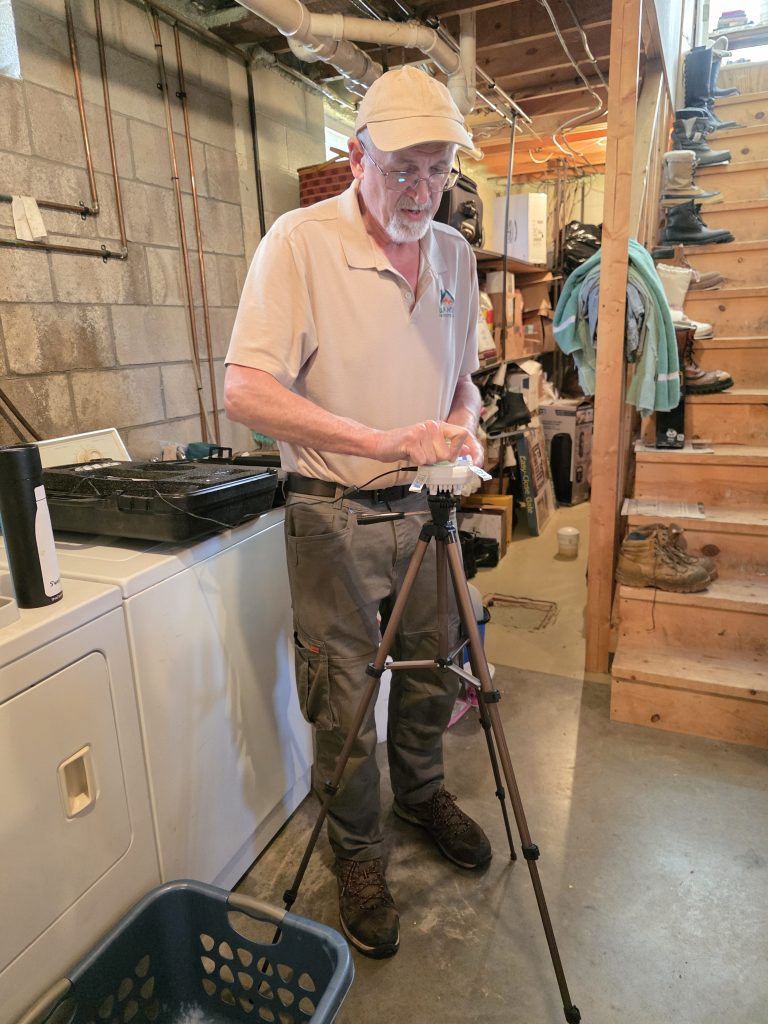
Mold is far and away the most common concern homeowners bring to us in the U.P. — more than any other single issue. Given our climate, that’s not surprising. Long winters, heavy moisture loads, significant freeze-thaw cycling, and older housing stock across Marquette County, Alger County, and Delta County create conditions where mold can establish itself quickly. Often, this happens in areas homeowners don’t see regularly: attics, crawl spaces, basements, and the wall cavities around windows and exterior penetrations.
During a home maintenance inspection, we visually assess for signs of mold growth throughout the home. If we see it, we document it in your report.
But here’s an important distinction: visual inspection is not the same as mold testing.
Seeing discoloration on a surface tells you something might be there. It doesn’t tell you what species it is, how elevated the spore count is, or how it compares to normal outdoor background levels. For that, you need air quality sampling and/or surface testing — a laboratory process that gives you an actual, quantifiable picture of your home’s indoor air quality. That is a separate service.
If you have concerns about mold, we can perform a home inspection and mold testing in the same visit. Many homeowners in our service area choose this combination to get a complete picture of their home’s health. Learn more about our mold testing services here.
What About Pests and Animals?

The U.P. is surrounded by wild land. That’s one of the best things about living up here. It’s also why we routinely find evidence of critters that have decided your home looks like a good place to spend the winter, or raise their families in summer.
During a maintenance home inspection, we look for signs of pest intrusion and animal activity in crawl spaces, attics, basements, and wall voids. Common findings in our service area include:
- Mice and squirrels, which chew wiring, tear up insulation, and leave behind moisture and contamination
- Raccoons, which are surprisingly capable of causing significant damage once they get into an attic
- Wasps, which establish nests inside wall cavities and soffits
- Carpenter ants, a wood-destroying organism (WDO) present throughout our region, capable of serious structural damage over time — especially in moisture-affected wood
We document the evidence: gnaw marks, droppings, nesting material, and entry points. That gives you a clear picture of what’s there and where it’s getting in.
As for what else we’ve found in U.P. crawl spaces over the years — let’s just say the list is long. Rich once quietly withdrew from a crawl space mid-inspection after finding a black bear deep in winter sleep. He left it alone. It made the report. The bear, as far as we know, never knew he was there.
The point is: things are happening in your home that you may not be aware of. A maintenance inspection is how you find out.
How Often Should You Schedule a Home Maintenance Inspection?
For a home in good condition, every three to five years is a reasonable interval. If your home is older, has a history of moisture issues, or hasn’t been professionally inspected since you purchased it, sooner is better.
We also recommend a home maintenance inspection after any significant weather event — a severe ice storm, an unusually heavy snow year, or major spring flooding. U.P. homes take a beating. It’s worth knowing how yours came through.
For most homeowners, the best starting point is a full maintenance inspection to establish a baseline. From there, you can schedule follow-ups based on what we find and how your home performs over time.
What Does a Home Maintenance Inspection Cost in the Upper Peninsula?
Pricing is based on your home’s square footage and its distance from our home base in Eben Junction, Alger County. We serve homeowners throughout Marquette, Alger, Delta, Schoolcraft, Dickinson, and Menominee counties.
Contact us for a quote, or use our online scheduling tool to get started. We’re happy to answer questions before you book.
Frequently Asked Questions
What is a home maintenance inspection? A home maintenance inspection is a full professional inspection of your home — covering all major systems and components from roof to foundation — performed for the benefit of the current homeowner. It follows the same InterNACHI Standards of Practice as a buyer’s inspection, and it is available to any homeowner at any time.
What does a home maintenance inspection include? It covers all readily accessible systems and components: roof, exterior, foundation, structural elements, electrical, plumbing, HVAC, insulation, ventilation, and interior spaces. All findings are documented in a detailed digital report with photos.
How much does a home maintenance inspection cost? Pricing depends on your home’s square footage and distance from our base in Eben Junction. Contact us for a quote.
How often should I get a home maintenance inspection? Every three to five years is a good interval for most homes in solid condition. Older homes, homes with known moisture issues, or homes that haven’t been professionally inspected in many years may benefit from more frequent attention.
What’s the difference between a home maintenance inspection and a buyer’s inspection? The inspection itself is identical — same thoroughness, same standards, same report quality. The difference is context. A buyer’s inspection happens as part of a real estate transaction. A maintenance inspection is simply for a homeowner who wants an honest, objective assessment of their home’s condition, to help with prioritizing and budgeting and to ensure the safety of the occupants. There is no reduced scope. You get the full inspection.
Schedule Your Home Maintenance Inspection
If it’s been a while since your home was professionally inspected — or if you’ve never had one done — a home maintenance inspection is a solid next step.
U.P. Home Inspection serves homeowners throughout Marquette, Alger, Delta, Schoolcraft, Dickinson, and Menominee counties, including Marquette, Negaunee, Ishpeming, Gwinn, Munising, Escanaba, Gladstone, Manistique, Newberry, and surrounding communities.
Schedule online here or call or text us at (906) 360-3879. We’re happy to answer questions before you book.
Want to learn more?

Rich Beasley leads U.P. Home Inspection, LLC as a Certified Master Inspector® with deep roots in Upper Peninsula construction needs. In 2025, Rich earned the prestigious CMI® designation from the Master Inspector Certification Board, reflecting our team’s dedication to experience, education, and the highest industry standards.