Thinking about a rural home in the Upper Peninsula? If you’ve always lived in town, the idea of a private well and your own septic system can feel a little daunting. No city water, no public sewer—just you and the systems in your yard. It’s normal to feel a flicker of “what am I getting into?”
Here’s the good news: these systems aren’t mysterious, and you don’t have to figure them out alone. Millions of rural homes run on wells and septic tanks without a second thought. Once you understand the basics, they’ll fade into the background of daily life.
That’s what this guide is for. And here’s a quick glance at how we help: a well and septic inspection isn’t one service: it’s two separate evaluations we add on to a full home inspection. We never sell these as standalone jobs, and we’ll never upsell you on something you don’t need.
If you’re buying out past the city limits—in Rapid River, Chatham, Gwinn, or anywhere the public utilities stop—this guide is for you.
The Short Version: A rural Upper Peninsula home relies on two separate systems: a private well for clean water in, and a septic system for waste water out. Neither is covered by a standard home inspection—each is a separate add-on. We test well water for bacteria, nitrates, and nitrites through a certified lab. For septic, we run a flow test to confirm the drain field is working, but for the tank’s true condition we’ll point you to a septic company that pumps and inspects it. Add either or both when you book your inspection, and you only pay for what the home actually needs.
Why Rural Homes Depend on Two Separate Systems
In town, water and sewer are somebody else’s problem. Out here, they’re yours.
A rural home runs on two systems that have very little to do with each other. The well brings clean water in. The septic system takes waste water out. One is about what you drink and bathe in. The other is about where everything goes when you flush. They’re built differently, they fail differently, and they get evaluated separately.
That’s why we treat “well and septic inspection” as two distinct add-ons, not a bundle. When you schedule a home inspection with us, you can add water quality testing, a septic evaluation, or both. In effect, that puts together a rural inspection package tailored to the property. Each piece stands on its own, and you only pay for what the home actually needs.
Here’s why it matters so much out here: if either system fails, the house doesn’t work. A home you can’t get clean water into, or can’t safely flush, isn’t livable. These two systems are the lifeblood of a rural home, and the inspection window is your one protected chance to look at them before the house is yours.
Does a Home Inspection Include Septic or Water Testing?
No. A standard home inspection does not include well and septic inspection. Water quality testing and septic inspection are two separate, specialized evaluations you may elect to add on. We handle each as a separate service.
This is where it helps to know who’s doing the looking. Our lead inspector, Rich Beasley, is a Certified Master Inspector® (CMI®)—the highest designation in the field—but his background here runs deeper than a title. Before home inspecting, Rich spent years in excavation, septic system installation, and water well drilling. He’s not just glancing at a tank and a wellhead. He’s installed these systems from the ground up.
On top of the CMI®, Rich holds three separate InterNACHI certifications that line up exactly with these systems: Certified Well Inspector, Certified Septic Inspector, and Certified Water Quality Tester. Three certifications, because these really are three different things.
Understanding Your Septic System
If you’ve never lived in a rural area, a septic system can sound intimidating. It isn’t. Once you understand the parts, it’s just part of life in the country.
A septic system does one job: it deals with all the water that drains out of your home. Toilets, showers, sinks, the washing machine—it all has to go somewhere. Where there’s no public sewer, a septic system treats that wastewater right there on your property, using a mix of natural settling and a drain field.
Across the U.P., we mostly see two types.
Conventional systems are the simpler setup. Wastewater flows from the house into a buried septic tank. Here, solids settle to the bottom. The liquid on top flows out by gravity into a drain field: a network of perforated pipes in gravel-filled trenches. The soil does the final filtering as the water trickles down. Conventional septic systems work great where you’ve got decent soil and a low water table.
Raised-bed systems—sometimes called mound systems—show up where a conventional system won’t work: heavy clay, solid rock close to the surface, or a high groundwater table. All three are common in parts of the Upper Peninsula. Instead of relying on gravity down into native soil, a pump pushes the liquid up into a built-up sand mound above ground, where bacteria in the sand and gravel finish treating it before it filters into the earth. A mound septic system has more parts, more to maintain, but sometimes it’s the only system a site can take.
The type of septic system a property has depends on the soil, the landscape, the water table, and the size of the home and lot. That’s not a choice a homeowner or builder makes on a whim: the ground dictates it.
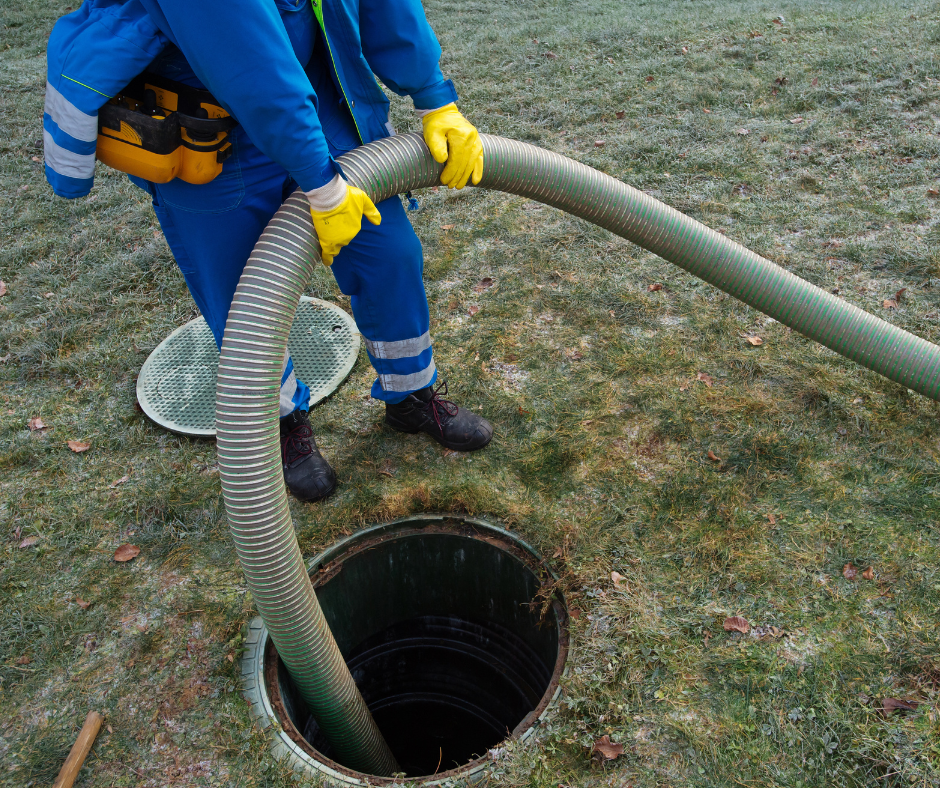
One maintenance note worth knowing before you buy: a septic system generally needs pumping every three years or so. It’s not a DIY job. A good septic company handles the pumping and takes a look inside while they’re at it—which brings us to the part that surprises a lot of our clients.

What We Check on a Septic Evaluation—and Why We’d Rather Send You to a Septic Company
Here’s where we tell it to you straight, because a lot of inspectors won’t.
On a septic evaluation, we can run a flow test—sometimes called a push test. We run water through the system and confirm the drain field is accepting it and moving it the way it should. That tells you the field is functioning at the time we look at it. It’s real, useful information.
But here’s what a flow test can’t tell you: the actual condition inside the tank. Without pumping the tank out, nobody can see the baffles, gauge the sludge level, or spot cracks and wear inside. A lot of home inspectors will happily sell you a septic inspection as an upsell anyway. We’d rather be honest about its limits.
When you really want to know what you’re buying, the better move is to hire a septic company to come pump the tank. Once it’s empty, they can inspect it properly and give you a far clearer picture than any flow test can. We steer our buyers toward this route whenever it makes sense. It’s not because we can’t do the evaluation, but because we’d rather you get the real answer than a partial one.
So yes, we’ll do a septic evaluation as an add-on if you want it. Just know what it does and doesn’t cover, and know that for a full picture, a pump-and-inspect from a septic company is the way to go.
U.P. Soils and the $15,000 Drain Field Nightmare
The drain field is the part that’ll cost you if it’s failing—and it’s exactly the part you want to catch before closing, not after.
Remember those two soil realities? They matter here. Sandy soil drains beautifully; a well-built field in good sand can last decades. Heavy clay and rock are the opposite— they hold water instead of letting it filter, which stresses a drain field and can shorten its life. Much of the U.P. sits somewhere on that spectrum, and the same peninsula can go from sand to clay in a few miles.
When a drain field fails, you’re not looking at a cheap fix. A full replacement commonly runs $15,000 or more. If it fails after you own the home, it’s entirely your bill. That’s the whole reason to evaluate the system during the inspection window: a problem found before closing is a negotiating point for your real estate agent to work with. A problem found after closing is just yours.
We’re not telling you this to scare you. Plenty of rural homes have septic systems that run fine for years. We’re telling you so you can make your decisions fully informed.
Water Quality Testing: A Separate Add-On for Rural Wells
Now the other system: the water coming in. This is a completely separate add-on from the septic evaluation, with its own testing and its own lab work.
If a home draws from a private well, nobody’s checking that water but you. There’s no city utility testing it. Two of the most common concerns we look at in U.P. well water are:
- Nitrates and nitrites—often tied to fertilizer or agricultural runoff, and a real concern for households with infants.
- Bacteria—coliform and E. coli, which signal that surface contamination may be getting into the well.
- Our comprehensive water quality test also tests for additional contaminants, including lead and arsenic.
You can buy a hardware-store test kit, but lenders and serious buyers want a sample collected and analyzed by a disinterested third party through a certified lab—not a strip you dip yourself. Why? Because there are so many ways to inadvertently contaminate a water sample without even knowing it. As Certified Water Quality Testers, our inspectors have been trained to collect the sample properly. Then we send it straight to the lab, so the result actually holds up.
On city water? You usually don’t need this. The occasional exception is an older home where aging service lines could pick up contaminants between the main and the tap. But for most in-town buyers, it’s not necessary.
Want the full detail on what we test for and how it works? See our water testing page.

VA and Rural Development Loans: The Water Test You May Be Required to Get
If you’re buying with a VA or USDA Rural Development loan, water testing may not be optional. Your lender may require you to have one before you can close.
These loans typically require a well water test screening for bacteria, nitrates, and nitrites before the deal goes through. The good news for U.P. veterans: we can often run this through a local lab with a faster turnaround than the big comprehensive panels, so it doesn’t hold up your closing.
(In fact, the turnaround on this service is so much faster that many of our rural buyers choose this test even if they’re not getting a VA or rural development loan, just to keep the home-buying process moving along on schedule.)
One money-saving tip: ask your lender exactly which test they require before you order anything. Requirements vary, and knowing up front means you pay for the test you need—not a more expensive panel you don’t. A quick call saves real money.
How These “Well and Septic Inspection” Add-Ons Fit Into Your Inspection
Let’s bring it together simply. A rural U.P. home runs on two separate systems, and you’ve got two separate ways to check them:
- A septic evaluation (a flow test as an add-on—with our honest steer for most buyers toward a septic company for a full tank inspection), and
- Water quality testing (a separate add-on, and sometimes a loan requirement).
You can add either or both when you book a home inspection. Together with the full inspection, that’s effectively a rural home inspection package built around the property—but each piece stands alone, and you only pay for what the home needs. The inspection window is the one time you’ve got real leverage to understand these systems before they become your responsibility. Use it.
Frequently Asked Questions
Does a home inspection include a septic inspection?
No. A standard home inspection does not include the septic system. It’s a separate add-on. We can run a flow test to confirm the drain field is working, but for the tank’s true condition, we’ll point you toward a septic company that pumps and inspects it.
Do home inspectors test well water?
Not as part of a standard inspection. Water quality testing is a separate add-on. As Certified Water Quality Testers, our inspectors collect a proper sample and send it to a certified lab to check for bacteria, nitrates, and nitrites—results that actually hold up with lenders.
How much does a well and septic inspection cost?
It depends on the property and which evaluations you add. These are separate services layered onto your home inspection, not one flat-rate package. Give us a call at (906) 360-3879 and we’ll walk you through what a specific home needs.
Who pays for well and septic testing when buying a house?
In most cases, the buyer arranges and pays for these evaluations, since they’re done for your benefit before closing. Your real estate agent can advise on whether any of it becomes part of your negotiation.
Is a septic inspection worth it before buying a house?
For a rural home, understanding the septic system before closing is worth it. A failed drain field can cost $15,000 or more, and after closing, it’s entirely your bill. Just know that a flow test has limits; a pump-and-inspect from a septic company gives you the fullest picture.
Do I need a water test for a VA or USDA loan?
Typically, yes. VA and USDA Rural Development loans generally require a well water test for bacteria, nitrates, and nitrites before closing. Ask your lender exactly which test they require before ordering, so you don’t pay for a more expensive panel than you need – or have to hire us to come out again to test for something that didn’t get ordered the first time.
Schedule Your Rural Home Inspection
Buying a home with a well and septic system in Alger, Marquette, Delta, or anywhere across the Upper Peninsula? Let’s make sure you know what you’re getting.
Schedule your home inspection and ask about adding water quality testing and/or a septic evaluation. We’ll give you honest answers about what we find—and honest advice about when someone else is the better call.
Questions first? Give us a call at (906) 360-3879. And for more U.P. home-buying tips, follow us on Facebook.

U.P. Home Inspection, LLC is the Upper Peninsula of Michigan’s most trusted home inspection company. Our team is led by Certified Master Inspector® Rich Beasley — the industry’s highest professional designation, earned through thousands of inspections and a demonstrated commitment to excellence. Every member of our team is InterNACHI certified and brings real U.P. construction knowledge to every inspection we perform.