
April is National Lawn & Garden Month — a good time to take a closer look at what’s happening outside your home.
Most buyers focus on what’s inside: the kitchen, the bathrooms, the basement. But your yard can pose some of the most serious safety and property risks of any part of the home. Tree roots damaging your foundation, overhanging limbs wearing down your roof, poor drainage sending water toward your basement — these are real issues we see on inspections throughout Marquette, Delta, Alger, and Schoolcraft counties.
The good news? Most landscape safety issues are fixable once you know what to look for.
Can Tree Roots Damage Your Foundation?
Yes — and it happens more often than most people expect.
Tree roots follow moisture. If water tends to collect near your foundation (more on that shortly), roots will follow. Over time, they can work their way into small cracks, widen them, and compromise the structure of the foundation itself. They can also disrupt the soil around the foundation, causing uneven settling.
The trees most likely to cause problems are the ones with large, aggressive root systems. Oaks and maples are common across the Upper Peninsula, and both are known for root spread that can extend well beyond the canopy. As a general rule, a tree’s roots can spread two to three times the width of its canopy.
Signs of tree root damage to your foundation include:
- Cracks in the foundation wall, especially horizontal or stair-step cracks
- Doors or windows that stick or no longer close properly
- Uneven floors
- Gaps between walls and ceilings or floors
If you notice any of these, it’s worth having a qualified foundation contractor take a look. And if you’re buying a home with large trees near the foundation, your inspector should flag the proximity and note any visible signs of impact.
One more thing to keep in mind about tree roots: they are notorious for growing into plumbing lines. This is especially true for older U.P. homes, like many in Marquette’s East Side or Houghton’s downtown neighborhoods. We all love the benefits of beautiful mature trees, but no one like to have to deal with backed-up plumbing in the basement!
If you think this may be an issue in a home you are considering, look closely for signs of previous moisture or flooding in the basement. It also doesn’t hurt to have a local plumber scope the line for tree root intrusion and damage. Fortunately, finding tree roots in the line isn’t a deal-breaker. You’ll just need to be proactive about protecting your sewer lines from root damage through regular use of root killers or roto-rooting, and/or having your plumber install a protective sleeve inside the line.
What About Tree Limbs Over Your Roof – Can Overhead Branches Damage Your Home?
This is one of the most common landscape safety findings we note on inspections across the U.P. — and one of the most overlooked by homeowners.

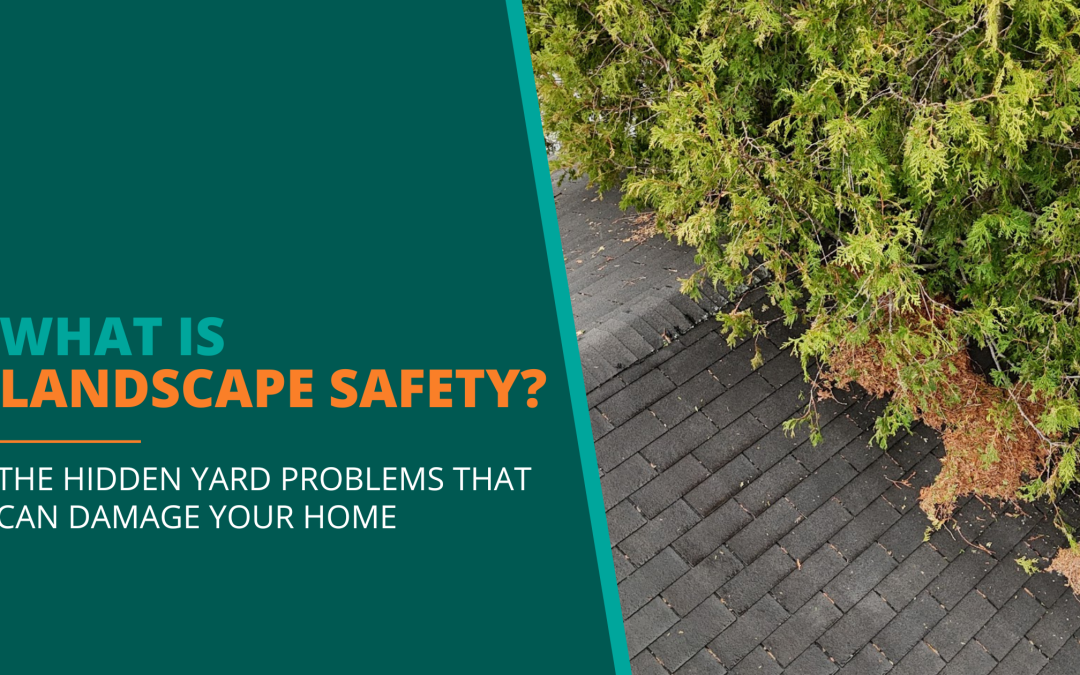
When limbs touch or overhang a roof, a few things happen. The limbs scrape shingles during wind, wearing away the protective granule layer over time. They hold moisture against the roof surface, speeding up deterioration. They drop leaves and debris into gutters, causing blockages that lead to water backup and ice dams — a serious issue in U.P. winters. And they create a highway for squirrels, raccoons, and other critters to access your attic.
Beyond limbs, the canopy itself matters. A large tree planted too close to the house will eventually have its trunk pressing against the structure as it grows. We’ve seen this go as far as a trunk growing directly into a roofline.
How far should a tree be from your house?
As a general guideline, we like to see at least 3 feet of clearance between vegetation and the home. Small trees should be planted at least 10 feet from the home. Medium trees need at least 15 to 20 feet. Large trees — oaks, maples, and similar species common across the U.P. — should ideally be 20 feet away or more. If a tree is already too close, an arborist can help assess the risk and recommend trimming or removal.
What Landscape Drainage Problems Can Do to Your Home
Water is one of the biggest threats to any home — and your yard has a lot to say about where it goes.
Negative grading is the term inspectors use when the ground slopes toward the house instead of away from it. It sounds minor, but it means every rain and every snowmelt event sends water running directly toward your foundation. Over time, this can lead to water intrusion in the basement, moisture problems, and mold — issues that are expensive to fix and easy to miss until they’re well established.
Pooling water is another common landscape safety problem. When water collects in low spots on driveways, patios, and walkways, it creates slip-and-fall hazards during freeze-thaw cycles — a near-constant reality in the U.P. from October through April. It also accelerates deterioration of your walkways and drive. Standing water in low spots in the yard also breeds mosquitoes during warmer months.
Erosion is worth watching for, too. If soil is washing away from around the foundation, it can expose the foundation wall and create new pathways for water and pests.
What should grading look like? The ground should slope away from the home at a rate of at least six inches over the first ten feet. If it doesn’t, a grading correction — adding soil and regrading — is often a straightforward fix.
Trip Hazards You Might Not Notice in the Yard
Not all landscape safety issues involve the home itself. Some of the most common hazards are right underfoot.
Tree roots are a major cause of sidewalk and driveway heaving. As roots grow, they push up through pavement, creating uneven surfaces that are easy to trip on — especially for children and older adults. This is worth noting both for safety reasons and for liability if someone gets hurt on your property.
Uneven or settled pavers, cracked concrete, and sunken walkway sections are other common findings. These tend to develop gradually, which is why it’s easy to stop noticing them — until someone takes a tumble.
If you’re buying a home, walk the full exterior carefully. If you’re already in your home, a fresh set of eyes on the property can catch things that familiarity makes invisible.
One Landscape Safety Hazard Most Homeowners Don’t Think About
Here’s something we find fairly regularly that surprises a lot of buyers: electrical cable run along the outside of a home without protective conduit.

People do this for all kinds of reasons — to power Christmas lights, run an outlet to a shed or garage, or hook up outdoor equipment. But standard Romex cable is not rated for outdoor use. Exposed to moisture, UV, and temperature swings — all of which we have in abundance in the U.P. — it degrades, creating a shock and fire hazard. Buried under a foot of snow for months, it’s also easy to forget it’s even there.
The fix is straightforward: outdoor wiring needs to be run in weatherproof conduit or replaced with cable rated for exterior use. An electrician can sort this landscape safety hazard out quickly.
Does Homeowner’s Insurance Cover Landscape Damage to Your Foundation?
This is a question worth asking your insurance agent directly, because the answer varies by policy. In general, homeowner’s insurance covers sudden, accidental damage — a tree falling on your roof in a storm, for example. Gradual damage from tree roots or poor drainage is typically considered a maintenance issue and is not usually covered.
That’s one more reason to address landscape safety concerns before they become serious. A conversation with your insurance agent can clarify exactly what your policy covers.
Landscape Safety FAQs for Homebuyers
Can tree roots really damage a home’s foundation?
Yes. Tree roots follow moisture and can enter small foundation cracks, widening them over time. They can also shift soil around the foundation, leading to uneven settling, cracks, and structural movement.
How close is too close for trees near a house?
It depends on the tree size. Small trees should be at least 10 feet away, medium trees 15–20 feet, and large trees like oaks or maples 20 feet or more. Roots can extend well beyond the canopy, so distance matters.
Can tree limbs damage a roof?
Yes. Limbs that touch or overhang a roof can scrape shingles, trap moisture, clog gutters, and accelerate roof wear. They also provide a path for pests like squirrels and raccoons to enter the attic.
What is negative grading and why is it a problem?
Negative grading means the ground slopes toward the home instead of away from it. This directs water toward the foundation, increasing the risk of basement leaks, moisture intrusion, and mold.
Can poor yard drainage cause basement water problems?
Absolutely. When water isn’t directed away from the home, it can collect near the foundation and eventually seep inside. Over time, this can lead to water damage, mold growth, and costly repairs.
Are uneven walkways and driveways a landscape safety issue?
Yes. Raised or sunken sections caused by tree roots or settling create trip hazards. These are especially risky during freeze-thaw cycles and can also become a liability concern for homeowners.
Does homeowner’s insurance cover landscape-related damage?
Usually not if the damage is gradual. Most policies cover sudden events, like a tree falling during a storm, but exclude long-term issues like root damage or poor drainage.
Is exposed exterior wiring a safety hazard?
Yes. Standard indoor electrical cable (like Romex) is not rated for outdoor use. Exposure to weather can degrade the insulation, creating shock and fire risks. Outdoor wiring should be properly protected or rated for exterior conditions.
Do home inspectors check the yard and landscaping?
Yes. A thorough inspection includes grading, drainage, trees, walkways, and visible exterior landscape safety hazards. These factors can significantly impact the home’s condition and long-term maintenance needs.
What Does a Home Inspector Look for in the Yard?
A thorough home inspection doesn’t stop at the front door. The exterior — including the yard, grading, trees, walkways, and visible electrical — is an important part of what we assess on every inspection.
At U.P. Home Inspection, our Certified Master Inspector® Rich Beasley brings over 15 years of construction and excavation experience to every inspection, which means he understands not just what something looks like, but why it’s a problem and what it takes to fix it. And with our drone capability, roof and canopy conditions that are hard to see from the ground get a much closer look.
If you’re buying a home in Marquette, Negaunee, Escanaba, Munising, Gwinn, Manistique, or anywhere else across the U.P., a professional inspection is the best way to know exactly what you’re getting — yard and all.
Ready to schedule your inspection?
We serve homebuyers and sellers throughout Michigan’s Upper Peninsula, including Marquette, Escanaba, Gladstone, Ishpeming, Negaunee, Manistique, Munising, and surrounding communities. Schedule online at uphomeinspection.com or call or text us at (906) 360-3879. We’d love to help you make a confident, informed decision about your next home.
Looking for more on exterior safety and maintenance issues? Check out our post on roof flashing here.

Rich Beasley leads U.P. Home Inspection, LLC as a Certified Master Inspector® with deep roots in Upper Peninsula construction needs. In 2025, Rich earned the prestigious CMI® designation from the Master Inspector Certification Board, reflecting our team’s dedication to experience, education, and the highest industry standards.