A practical guide to identifying and understanding asbestos-containing materials in older Michigan homes
If you’re shopping for older homes in Michigan’s Upper Peninsula, there’s a fair chance you’ll encounter asbestos containing materials at some point. Asbestos in U.P. homes is not a reason to panic—but it is something you need to understand.
As home inspectors serving communities across the U.P., we regularly spot potential asbestos-containing materials in older housing stock throughout Marquette, Escanaba, Ishpeming, Negaunee, and beyond.
Just last month, we inspected three different homes with suspected asbestos materials within a week or two of each other. These included cement siding on a home in the middle of Marquette, older vinyl floor tiles in a finished basement in Escanaba, and degraded floor tiles that had been painted over in a home on Marquette’s East Side. While we couldn’t confirm asbestos without laboratory testing, the age of these homes and the appearance of these materials raised red flags worth investigating.
As an Upper Peninsula home buyer, here’s what you should know about asbestos in U.P. homes—and how to approach it wisely when you’re buying an older property.
What Is Asbestos and Why Does It Matter?
Asbestos is a naturally occurring mineral fiber. It was an incredibly popular component of building materials throughout most of the 20th century. Manufacturers loved asbestos because it was strong, fire-resistant, heat-resistant, and didn’t conduct electricity. These properties made it perfect for insulation, fireproofing, and reinforcing various building materials.
The problem? When asbestos-containing material is damaged, deteriorated, or disturbed, it releases microscopic fibers into the air. When people inhale these fibers over time, they can develop serious health conditions, including lung cancer, mesothelioma, and asbestosis. According to the EPA, there’s no safe level of asbestos exposure, though low-level exposure in the ambient air is common and typically doesn’t cause problems.
But despite EPA warnings, the good news is that intact, undisturbed asbestos isn’t dangerous. Asbestos-containing materials in good condition that aren’t cut, sanded, scraped, or otherwise damaged don’t release fibers into the air. This is why understanding where asbestos might be hiding—and how to handle it properly—matters so much.
When Was Asbestos Used in Homes?
The peak years for asbestos use in residential construction were roughly 1930 through 1980. If you’re looking at homes built during this period, there’s a strong likelihood you’ll encounter asbestos-containing materials somewhere in the structure.
The U.S. began phasing out asbestos in building materials during the 1970s. Major restrictions took effect in 1978 for spray-applied products and continued through the 1980s for other applications. However, asbestos wasn’t completely banned in all building materials until much later. Some products containing asbestos remained available into the 1990s.
So what year do houses have no asbestos? While there’s no magic cutoff date, homes built after the mid-1980s are much less likely to contain asbestos. Would a house built in 1992 have asbestos? It’s possible, but far less common than in earlier decades. A house built in 1978 or 1980? Those are right in the prime asbestos era.
Why Asbestos in U.P. Homes Is So Common
Here in the U.P., we’re dealing with a particularly old housing stock. Towns like Houghton, Hancock, Ishpeming, Negaunee, and Marquette are filled with beautiful historic homes. Many were built between 1880 and 1960, meaning that they would have been built and/or renovated right when asbestos use was at its peak. Asbestos was the go-to material for builders who needed durable, fire-resistant, and economical solutions for our harsh climate.
Is it common for old houses to have asbestos? In the U.P., absolutely. Do all old homes have asbestos? Not necessarily, but a significant percentage of pre-1980 U.P. homes do contain asbestos in at least one form.
Where Asbestos Hides in Buildings
Most people know about asbestos pipe insulation—that distinctive white or gray wrap around pipes in basements. But asbestos-containing materials show up in many other places throughout older homes:
Common Locations for Asbestos in U.P. Homes
Exterior Materials:
- Cement siding (often textured or in shingle form)
- Roofing shingles and felt
- Soffits and fascia
Flooring:
- Vinyl floor tiles (especially 9″x9″ and 12″x12″ tiles)
- Sheet vinyl flooring
- Adhesive and backing materials beneath flooring
Insulation:
- Pipe and boiler insulation (white or gray wrapping)
- Vermiculite attic insulation (looks like small, shiny pebbles)
- Duct insulation
- Insulation around furnaces and wood stoves
Interior Finishes:
- Popcorn ceilings (textured ceiling finish)
- Joint compound and spackling
- Some textured paints
- Plaster
Other Materials:
- Furnace gaskets and seals
- Old electrical panels
- Cement board around stoves and fireplaces
- Older window caulking and glazing putty
Where is asbestos most commonly found in homes we inspect? In the U.P., we most frequently encounter suspected asbestos in pipe insulation, siding, floor tiles, and vermiculite insulation.
How to Tell If an Old Home Has Asbestos
Here’s the truth: You can’t definitively tell if something contains asbestos just by looking at it. The only way to know for certain is through asbestos testing by a certified professional. This is beyond the scope of a standard home inspection.
That said, there are warning signs that help us identify materials that may contain asbestos during a home inspection:
Visual Clues That Suggest Asbestos-Containing Material
Age and appearance matter: Materials installed before 1980 in forms commonly made with asbestos deserve suspicion. For instance:
- Floor tiles: 9″x9″ or 12″x12″ vinyl tiles from before 1980 often contained asbestos
- Cement siding: Rigid, cement-like siding installed before 1980, often with a textured or flat finish
- Pipe wrap: White, gray, or brownish corrugated or smooth wrap around pipes and boilers
- Vermiculite: Lightweight, pebble-like insulation (often gray-brown with a gold or silver sheen) likely contains small amounts of asbestos if installed before 1990
- Popcorn ceilings: Textured ceilings installed before 1979 may contain asbestos
Condition matters too: We pay special attention to materials showing signs of damage or deterioration because these pose higher risks. Broken siding, crumbling insulation, damaged floor tiles, or flaking ceiling texture all increase the chance of fiber release.
What We Look For During Home Inspections
As certified home inspectors, our role is to spot potential asbestos-containing materials and alert you to their presence. We’re not licensed asbestos professionals, and we don’t perform asbestos testing during standard home inspections. Think of us as your watchdog—we’re trained to recognize the warning signs of asbestos in U.P. homes and recommend further evaluation when needed.
During a buyer’s inspection, we document:
- Materials that match the age and appearance of known asbestos-containing products
- The condition of suspected materials (intact vs. damaged)
- Locations where asbestos might be present
- Recommendations for testing or professional evaluation
We include these observations in your inspection report so you can make informed decisions about the property.
What Does Asbestos Look Like in Old Houses?
Since asbestos was mixed into so many different products, it doesn’t have one consistent appearance. Here’s what to watch for:
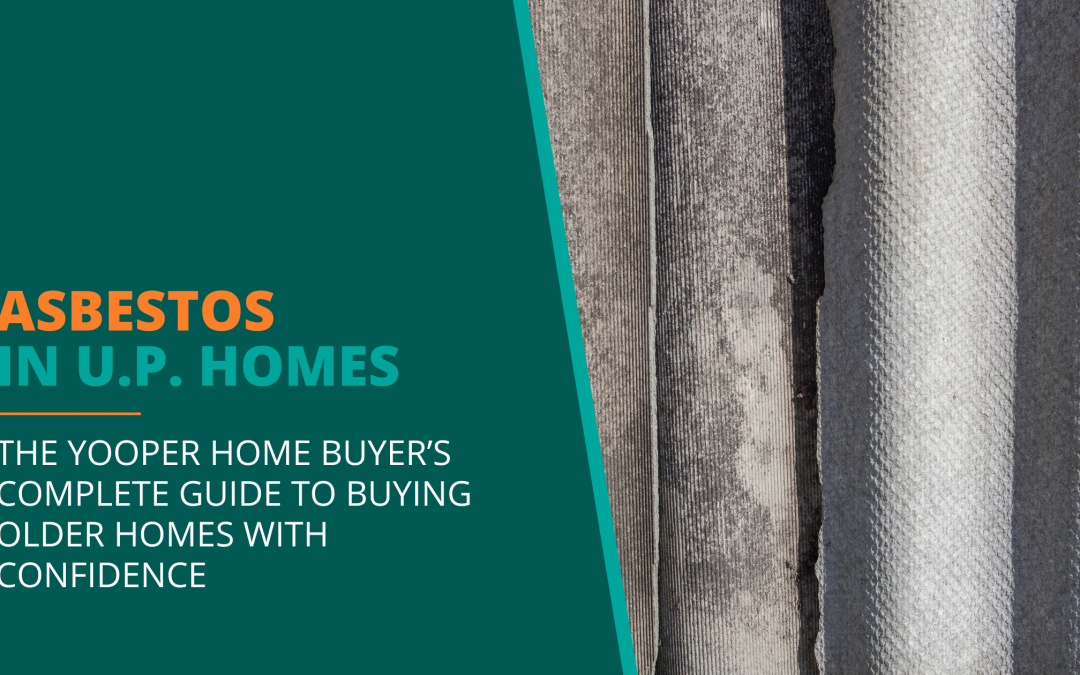
Asbestos cement siding typically looks like rigid shingles or panels, often with a flat or slightly textured surface. It may be painted, but has a distinctly hard, cement-like feel. When broken, the edges appear fibrous.
Asbestos floor tiles are usually vinyl composition tiles in common sizes (9″x9″ or 12″x12″). They may have marbled patterns or solid colors and feel somewhat brittle when old.
Asbestos pipe insulation appears as white, gray, or tan wrapping material—sometimes smooth, sometimes corrugated. It may be covered with canvas-like fabric or paper.
Vermiculite insulation looks like small, lightweight pebbles with a shiny, accordion-like structure. It’s typically gray-brown or silvery-gold.
Popcorn ceilings with asbestos look like any other textured ceiling—bumpy, cottage-cheese-like texture applied to ceiling surfaces.
Is It Okay to Live in a House With Asbestos?

Yes—with important caveats. Asbestos in buildings is only dangerous when fibers become airborne and are inhaled. Intact, undisturbed asbestos-containing materials don’t release fibers and don’t pose immediate health risks.
Many people live safely in homes with asbestos for decades without problems, as long as:
- Materials remain intact and undisturbed
- No renovations or repairs disturb asbestos materials
- Damaged areas are properly addressed
- Materials are monitored for deterioration
The key is knowing where asbestos exists in your home and treating those materials appropriately.
When Asbestos Becomes a Concern
Asbestos materials become hazardous when they’re:
- Damaged or deteriorating: Broken siding, crumbling insulation, cracked tiles
- Being cut, sanded, or drilled: Any activity that creates dust from asbestos materials
- Disturbed during renovation: Removing popcorn ceilings, pulling up old flooring, demolishing walls
- Exposed to water damage or fire: These events can cause materials to deteriorate rapidly
What Are the First Signs of Asbestos Exposure?
Asbestos exposure symptoms typically don’t appear immediately. Asbestos-related diseases usually develop 10-40 years after exposure begins. Early signs may include:
- Shortness of breath
- Persistent dry cough
- Chest tightness or pain
- Loss of appetite with weight loss
- Fatigue
If you believe you’ve had significant asbestos exposure—especially if you’ve disturbed asbestos materials without proper protection—talk to your doctor. Be sure to mention the potential exposure so appropriate monitoring can be done.
Asbestos Home Test: How Testing Works
If you suspect asbestos-containing materials in a home you’re buying or already own, professional asbestos testing is the only way to know for sure. Here’s how it works.
The Asbestos Testing Process
Step 1: Hire a certified professional. Contact a licensed asbestos inspector (not your home inspector—we’re not certified for asbestos testing). Your real estate agent can often recommend qualified professionals in your area.
Step 2: Sample collection. The professional will collect small samples of suspected materials following strict safety protocols to minimize fiber release.
Step 3: Laboratory analysis. Samples are sent to an accredited lab that uses polarized light microscopy or other approved methods to identify asbestos fibers.
Step 4: Review results. The inspector provides a detailed report identifying which materials contain asbestos and in what percentages.
How much does it cost to get an asbestos check? Prices vary by location and the number of samples tested, but expect to pay $200-600 for testing of several materials in a typical home. This investment is usually worthwhile when you’re buying an older property, especially if you plan any renovations.
Can You Test for Asbestos Yourself?
DIY asbestos test kits are available, but we don’t generally recommend them. Collecting samples safely requires training and proper equipment. Improper sampling can release dangerous fibers and give inaccurate results. If you suspect asbestos in U.P. homes, professional testing is worth the cost for your safety and for reliable results.
What to Do If You Find Asbestos in U.P. Homes You’re Buying

Discovering potential asbestos during a home inspection doesn’t have to kill your deal. Here’s how to approach asbestos in U.P. homes when you’re buying:
For Materials in Good Condition
Intact asbestos materials are not an emergency. If testing confirms asbestos in materials that are in good condition:
Consider leaving it alone. Undisturbed asbestos doesn’t pose health risks. Many homeowners choose to monitor materials over time rather than remove them.
Factor it into your home maintenance budget. You’ll need to check these materials periodically for damage and be careful during any future renovations. Learn more about budgeting for home repairs here.
Encapsulation may be an option. For some materials like siding, installing new siding over the asbestos is often safer and cheaper than removal.
Disclose it if you sell. Once you know asbestos is present, you’re required to disclose this to future buyers.
For Damaged or Deteriorating Materials
Potential asbestos-containing materials showing damage or active deterioration require more immediate attention:
Get professional evaluation. Have a licensed asbestos professional assess the extent of damage and recommend appropriate action.
Consider repair vs. removal. Sometimes damaged areas can be repaired or encapsulated rather than fully removed—this is often safer and more affordable.
Use this in negotiations. Significant asbestos issues that require professional remediation are legitimate points for negotiation during the home-buying process. You might request that sellers address the issue before closing, or negotiate a price reduction to cover future remediation costs.
Don’t DIY. Never attempt to repair or remove damaged asbestos materials yourself. This is a job for certified professionals with proper equipment and training.
If You’re Planning Renovations
Asbestos becomes a much bigger concern when you’re planning to remodel:
Test before you renovate. If you’re buying an older home with renovation plans, include asbestos testing in your due diligence. Discovering asbestos mid-project is far more expensive and complicated than knowing about it upfront.
Hire licensed contractors. Any work involving asbestos materials must be done by certified asbestos abatement professionals. Standard contractors are not trained or equipped for this work.
Budget accordingly. Professional asbestos removal isn’t cheap. Costs can range from a few hundred dollars for small projects to many thousands for whole-house abatement. Factor this into your renovation budget and your purchase decision.
Consider timing. Some buyers prefer to address asbestos removal before moving in, especially for whole-house projects. This is easier when the home is empty.
Local Resources for Asbestos in the Upper Peninsula
If you need to dispose of asbestos materials in Marquette County, the Marquette County Solid Waste Management Authority provides specific guidelines for proper disposal. Other U.P. counties have similar programs—check with your local solid waste authority.
For questions about regulations and safety, the EPA’s asbestos information for homeowners is an excellent resource.
Your real estate agent can also be invaluable in connecting you with local certified asbestos professionals for testing and remediation.
The Bottom Line: Asbestos in U.P. Homes Doesn’t Have to Be a Deal-Breaker
Here’s what we want you to remember: Finding asbestos in U.P. homes is common, not catastrophic. What matters is:
- Knowing it’s there so you can make informed decisions
- Understanding its condition (intact vs. damaged)
- Treating it appropriately (leaving it alone, monitoring it, or having professionals address it)
- Factoring it into your budget and plans for the home
As home inspectors, we’re here to help you spot potential asbestos in U.P. homes before you buy. While we can’t test or remove asbestos, we can identify warning signs and provide the information you need to take next steps.
Potential asbestos in U.P. homes is just one of many factors we evaluate during a comprehensive home inspection. Our goal is to give you a complete picture of the home’s condition so you can buy with confidence—or negotiate effectively if issues arise.
Ready to Learn What’s Really in That U.P. Home?
Whether you’re looking at a historic home on the east side of Marquette or a mid-century ranch in Escanaba, a thorough home inspection is your first line of defense against unexpected surprises—including asbestos in U.P. homes.
At U.P. Home Inspection, we inspect homes throughout Michigan’s Upper Peninsula with an eye for both the common and the hidden issues that affect older properties. We’ll help you understand not just what’s wrong, but what it means for your investment and your family’s safety.
Schedule your home inspection today and buy your U.P. home with confidence.